 Login / Register
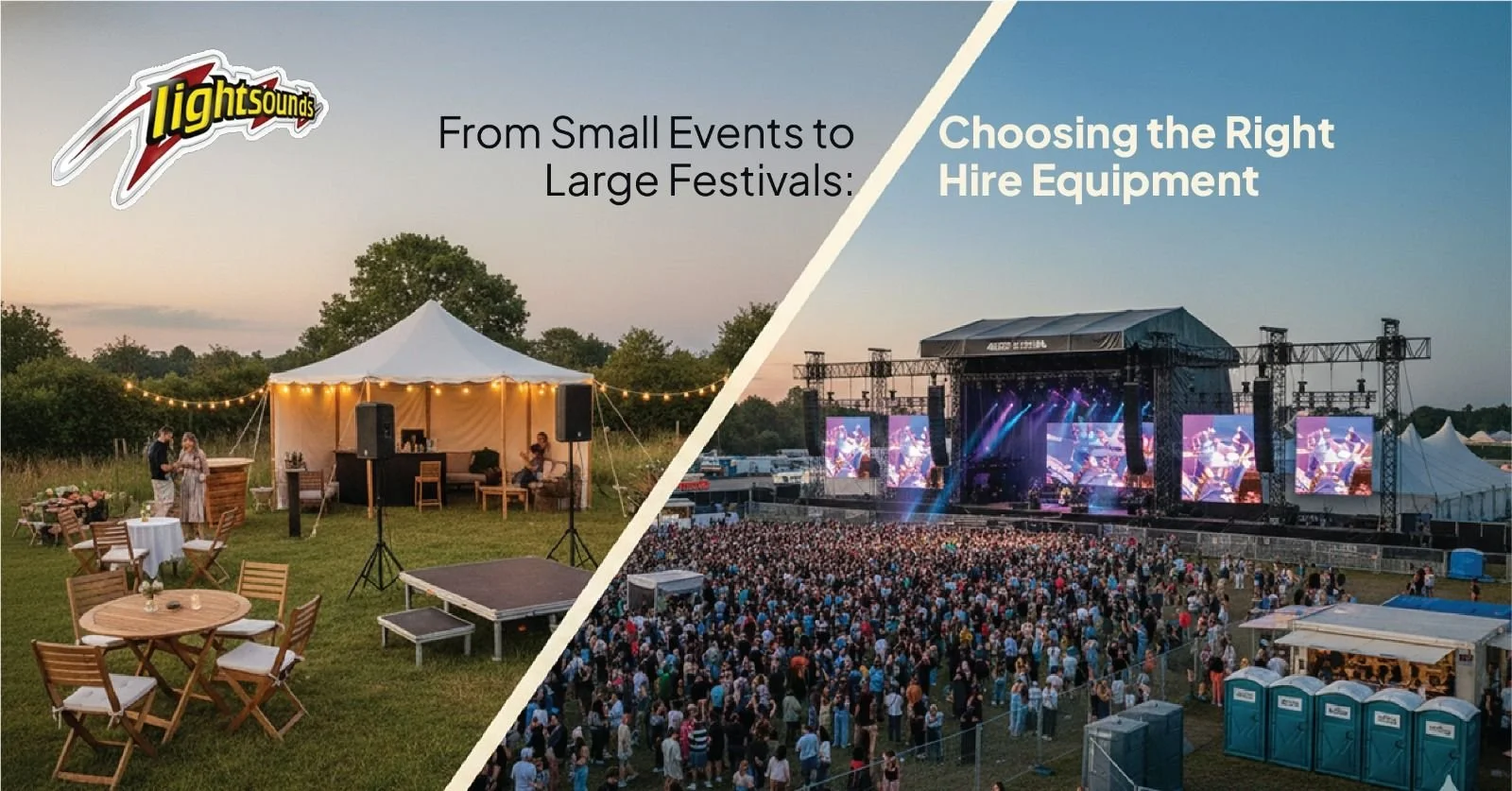
The equipment required for an event can vary significantly depending on the size, venue, audience and type of entertainment involved. A small private party may only need a compact PA system and a few lighting fixtures, while a large festival can require professional audio systems, stage lighting, trussing, power distribution and technical support.
Choosing the right event hire equipment is therefore about more than selecting the loudest speakers or brightest lights. The equipment needs to provide suitable coverage, work within the venue and support the way the event will operate.
Whether you are planning a private function, wedding, corporate event or large festival in Australia, understanding the main factors involved can help you choose a more suitable hire setup.
What Should You Consider When Choosing Event Hire Equipment?
Event scale is an important starting point, but it is not the only factor.
Before selecting equipment, consider:
- Type of event
- Number of guests or audience members
- Venue size and layout
- Indoor or outdoor location
- Acoustic conditions
- Power availability
- Stage and production requirements
- Type of entertainment
- Required lighting coverage
- Delivery, installation and technical support
Two events with the same number of guests can require completely different equipment if they are held in different venues or have different production requirements.
What Equipment Is Suitable for Small Private Events?
Smaller events generally benefit from equipment that is compact, easy to position and appropriate for the size of the venue.
For a small private event, wedding or birthday party, a typical setup may include:
- Portable PA speakers
- Wireless microphone
- Compact DJ controller
- LED lighting fixtures
- Uplights
- Basic dance-floor lighting
For smaller venues, hiring a system that is significantly larger than required may not provide a better experience. Speaker placement, room acoustics and suitable volume levels are often more important than simply increasing the power of the equipment.
What Equipment Is Needed for Medium-Sized Events?
Medium-sized events often require more coverage and flexibility than a small private function.
Depending on the event, the equipment may include:
- Multiple active speakers
- Subwoofers
- Wireless microphones
- DJ equipment
- Stage wash lighting
- Moving lights
- Uplighting
- Audio mixers
- Additional speakers for different areas
Corporate functions, wedding receptions, larger private parties and community events may all fall into this category, although the exact setup will vary according to the venue and event format.
What Equipment Is Used for Large Festivals and Events?
Large festivals and outdoor events can require considerably more planning.
A larger production may involve:
- Line array speaker systems
- Subwoofers
- Digital mixing systems
- Stage monitoring
- Wireless microphone systems
- Professional stage lighting
- Moving lights
- Lighting control systems
- Stage trussing
- Power distribution
- Cabling and signal management
- Technical crew and event operation
Large events also need to consider how sound and lighting will cover the audience area rather than simply focusing on the stage.
For festivals and major productions, equipment selection should be based on the venue, expected audience, stage design, required coverage and production requirements.
How Does the Venue Affect Your Equipment Choice?
Venue characteristics can have a significant effect on audio and lighting requirements.
Indoor Venues
Indoor spaces can have very different acoustic characteristics.
Large rooms with hard surfaces may produce reflections and reverberation, while rooms with carpets, curtains and soft furnishings may absorb more sound.
Ceiling height, room shape and the location of the stage can also influence speaker and lighting placement.
Outdoor Events
Outdoor events do not have walls and ceilings to contain sound, so speaker coverage and positioning need to be planned carefully.
Other considerations can include:
- Weather conditions
- Equipment protection
- Available power
- Cable routing
- Ground conditions
- Audience layout
- Distance between the stage and audience
For outdoor events, equipment should be suitable for the environment and installed according to the venue and event requirements.
Why Are Power and Safety Important?
Large event setups can involve significant amounts of audio, lighting and staging equipment, which makes power planning an important part of event production.
Before hiring equipment, confirm:
- Available power sources
- Equipment power requirements
- Cable routes
- Distribution requirements
- Generator requirements where applicable
- Venue restrictions
- Installation and rigging requirements
Cables should also be routed and secured appropriately to reduce trip hazards and protect equipment.
For larger productions, professional installation and technical operation can help manage more complex equipment and event requirements.
How Can Lighting Improve Different Types of Events?
Lighting requirements can change considerably depending on the event.
Weddings
Weddings often benefit from:
- Uplighting
- Soft wash lighting
- Pin spots
- Decorative lighting
- Dance-floor lighting
The lighting can transition from a softer dinner atmosphere to more dynamic effects when the reception moves towards dancing.
Corporate Events
Corporate functions often require:
- Stage wash lighting
- Presenter lighting
- Accent lighting
- Display lighting
- Controlled colour effects
The priority is usually clear visibility for speakers and presentations while maintaining a professional atmosphere.
Festivals and Live Events
Larger productions may use:
- Moving lights
- Stage wash fixtures
- Beam effects
- LED fixtures
- Programmable lighting
- Audience and stage lighting
The lighting system should support the performance while providing appropriate visibility and visual impact across the venue.
How Can You Choose Equipment Without Over-Hiring?
Hiring the largest system available is not always the best approach.
A more effective strategy is to match equipment to the actual requirements of the event.
Consider:
Audience size
How many people need to hear or see the production?
Venue layout
Where will the audience, stage, dance floor and other key areas be positioned?
Event format
Will the system mainly support speeches, music, DJs, live performers or presentations?
Production requirements
Will you need stage lighting, moving lights, microphones, monitors or additional audio zones?
Technical support
Will the equipment be operated by an experienced technician or event production team?
This approach can help avoid both under-specifying and over-hiring equipment.
Should You Choose Modular or Flexible Equipment?
For events that may change during planning, flexible equipment can be useful.
Modular setups can allow additional speakers, lighting fixtures or other equipment to be added when requirements change.
For example, a corporate event may initially require a simple presentation system but later add a larger stage, additional speakers or lighting for an evening function.
Wireless equipment can also provide flexibility in some applications, although the venue, frequency requirements and equipment specifications should always be considered.
Is Energy-Efficient Event Equipment Important?
Energy efficiency can be an important consideration, particularly for larger productions with many lighting fixtures.
Modern LED lighting can provide flexible colour and lighting options while generally using less power than comparable traditional lighting technologies.
Lower power consumption can also help with heat management and power planning, depending on the equipment being used.
However, equipment should be selected based on its performance, suitability and event requirements rather than energy efficiency alone.
What Should You Confirm Before Hiring Event Equipment?
Before finalising your hire, confirm:
- Event date and duration
- Venue location
- Expected audience size
- Indoor or outdoor setup
- Stage dimensions
- Available power
- Equipment access
- Delivery arrangements
- Installation requirements
- Technical operation
- Pack-down and collection
- Venue-specific restrictions
For larger events, it is particularly important to allow enough time for equipment planning, delivery and installation.
Frequently Asked Questions
What PA system is suitable for an outdoor festival?
- There is no single PA system that is suitable for every festival. Larger outdoor events may use line array systems, subwoofers and additional speaker coverage, but the final configuration depends on the audience size, venue, stage design, acoustics and required coverage.
How much lighting does a corporate event need?
- The amount of lighting depends on the venue, stage size, number of presenters and event format. A typical corporate setup may include stage wash lighting, presenter lighting and selected accent or decorative fixtures.
Do small events need professional equipment?
- Small events do not necessarily require a large professional production system. However, suitable-quality speakers, microphones and lighting can improve the experience and help ensure reliable performance.
Do outdoor events require different equipment?
- Outdoor events may require different planning because sound behaves differently without enclosed walls and ceilings. Weather conditions, power, cable routing and equipment protection also need to be considered.
Is a line array system necessary for every large event?
- No. Line array systems can be suitable for certain large-scale productions, but the appropriate audio system depends on the venue, audience size, coverage requirements and production design.
Should I hire equipment with installation and technical support?
- For simple setups, equipment-only hire may be sufficient if the operator is familiar with the system. Larger or more complex productions may benefit from professional delivery, installation and technical operation.
Choose the Right Equipment for Your Event
From a small private function to a large outdoor festival, the right hire equipment should be selected around the actual requirements of the event.
Venue size, audience numbers, acoustics, power, entertainment format and production requirements all influence the equipment you need. Matching the system to these factors can help you achieve reliable sound, effective lighting and a smoother event setup.
Lightsounds provides audio, lighting, DJ and event equipment hire for a range of events across Australia. Depending on the event and equipment requirements, options may include delivery, installation and event operation support.
If you are planning an upcoming event, explore Lightsounds’ event equipment hire or contact the team to discuss equipment suitable for your venue and production requirements.


