 Login / Register
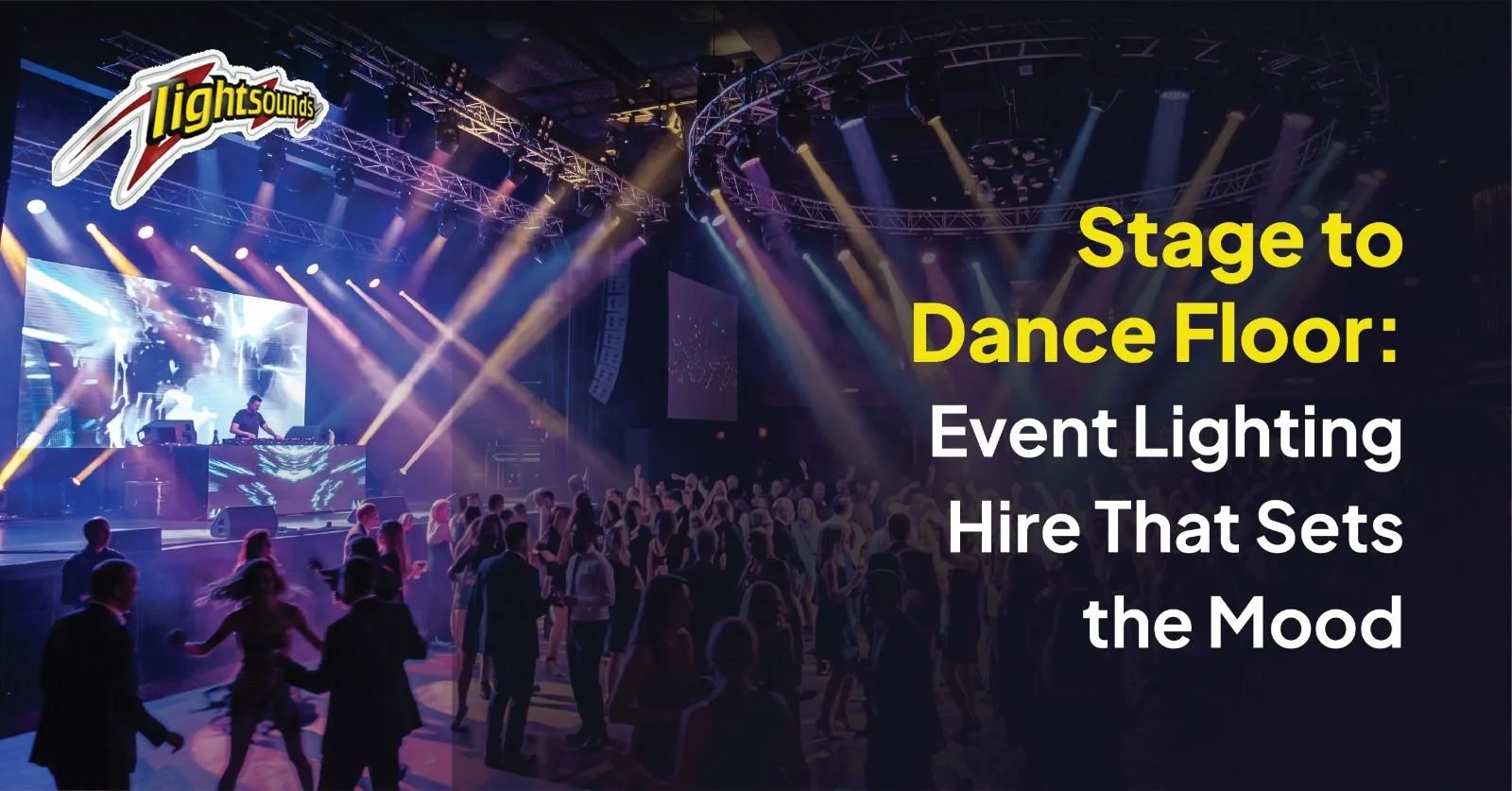
Lighting can change how guests experience an event from the moment they arrive until the final song. The right setup can help presenters and performers remain visible, create a comfortable atmosphere during dinner and gradually add energy when the dance floor opens.
A successful event lighting setup is therefore not about using the brightest or most effects-heavy fixtures. It is about choosing the right combination of lighting for each part of the event.
With event lighting hire, organisers can select equipment for stages, reception areas, walkways and dance floors without purchasing and storing a complete lighting system.
Why Is Event Lighting Important for an Event?
Lighting does more than illuminate a venue. It can help direct attention, define different areas and create different moods throughout an event.
For example:
- Stage lighting helps keep speakers and performers clearly visible.
- Uplighting can add colour and depth to walls and architectural features.
- Wash lighting can provide broad, even illumination across larger areas.
- Moving lights can introduce movement and colour to the dance floor.
- Pin spots can highlight specific details such as tables, displays or a wedding cake.
The most effective setup combines these fixtures according to what each part of the venue needs.
How Can Lighting Change Throughout an Event?
One of the benefits of a well-planned lighting setup is that the same venue can feel different as the event progresses.
Instead of using one lighting style from beginning to end, consider the event in three main stages.
Stage Lighting for Speeches and Performances
During speeches, presentations and live performances, visibility is the priority.
Stage wash lights can provide even illumination across the performance area, while more focused fixtures can help draw attention to presenters, performers or important parts of the stage.
The lighting should be bright enough for guests to see clearly without creating distracting glare or harsh shadows.
Ambient Lighting for Dining and Socialising
Once the formal part of the event begins, the lighting can become softer and more atmospheric.
Uplights can add colour to walls and architectural features, while other decorative fixtures can help create a more relaxed setting for dining and conversation.
This is particularly useful for weddings, corporate functions and evening events where the atmosphere needs to remain comfortable without making the venue feel overly bright.
Dance Floor Lighting for High-Energy Moments
When the dance floor opens, the lighting can become more dynamic.
Moving lights, colour-changing LED fixtures and other effects can add movement and energy to the space. Lighting can also be adjusted to complement the music and entertainment.
The objective is not to turn every event into a nightclub. The right setup should match the venue, music, event style and atmosphere the organiser wants to create.
What Lighting Equipment Can Help Create This Transition?
Different fixtures can perform different roles throughout the event.
| Lighting Type | Best Use | Effect |
|---|---|---|
| Stage wash lights | Presentations and performances | Clear, even illumination |
| Uplights | Walls and architectural features | Colour and atmosphere |
| Moving lights | Dance floors and entertainment | Movement and dynamic effects |
| Pin spots | Cakes, tables and displays | Focused highlights |
| LED fixtures | Multiple event areas | Flexible colour options |
| Effects lighting | Parties and entertainment | Additional visual impact |
The exact combination depends on the venue, event type, layout and available equipment.
How Do You Plan a Smooth Transition from Stage to Dance Floor?
The lighting transition should be planned alongside the event schedule rather than treated as an afterthought.
1. Start with the Formal Areas
Identify the stage, presentation area, bridal table or other focal points that need clear visibility.
2. Define the Social Areas
Consider the dining area, bar, entrance and other spaces where guests will spend time. These areas can use softer or decorative lighting to create a comfortable environment.
3. Prepare the Dance Floor
Determine where the dance floor will be located and how much space is available for moving lights and other effects.
4. Plan the Lighting Changes
If the event includes a professional lighting operator or programmable fixtures, lighting scenes can be prepared for different parts of the event.
For example:
Guest arrival → Dinner → Speeches → First dance → Open dance floor
Each stage can have a different lighting mood while still maintaining a consistent overall look.
What Should You Consider Before Hiring Event Lighting?
Before selecting equipment, consider the practical requirements of the venue.
Venue Size and Layout
The size, shape and layout of the venue affect how many fixtures you may need and where they can be positioned.
Consider:
- Stage location
- Dance floor size
- Ceiling height
- Guest seating
- Walls and architectural features
- Entrance and walkways
- Equipment access
Power Requirements
Lighting fixtures require power, and larger setups may require more careful power planning.
Confirm the available power at the venue and make sure cables can be routed safely without creating trip hazards.
Rigging and Installation
Some lighting fixtures may need to be mounted or positioned at height. In these situations, venue restrictions and appropriate rigging requirements need to be considered.
For larger or more complex productions, professional installation and operation may be appropriate.
Photography and Video
Lighting also affects how an event appears in photographs and video.
Very strong direct light can create harsh shadows, while poorly positioned fixtures can affect camera exposure and the overall look of the venue.
A balanced lighting setup should work for guests as well as photographers and videographers.
Are LED Lights a Good Choice for Events?
LED fixtures are widely used for event lighting because many models offer flexible colour options and can provide strong output with relatively efficient power use.
Depending on the fixture, LED lighting can be used for:
- Stage wash
- Uplighting
- Dance-floor lighting
- Architectural lighting
- Decorative effects
- Moving-light systems
However, LED should not automatically be selected simply because it is LED. The fixture’s output, beam angle, colour capabilities, placement and suitability for the venue should also be considered.
What Does Event Lighting Hire Usually Include?
Hire services can vary, so it is important to confirm exactly what is included before booking.
Depending on the provider, a lighting hire package may include equipment hire, delivery, installation, programming, operation and pack-down.
For more complex events, you may also need technical support or an on-site lighting operator.
Before confirming your booking, ask:
- Which lighting fixtures are included?
- Is delivery included?
- Is installation available?
- Who operates the lighting?
- Is programming included?
- What happens after the event?
- Are there additional setup or labour charges?
Understanding these details in advance can help you plan the event more accurately.
Why Choose Professional Event Lighting Hire?
Professional lighting can be useful when an event involves multiple areas, complex equipment or programmed lighting changes.
An experienced lighting team can help consider:
- Venue layout
- Equipment selection
- Power requirements
- Lighting positions
- Safe cable management
- Lighting transitions
- Stage visibility
- Dance-floor effects
For smaller events, a simple equipment hire setup may be enough. Larger productions may benefit from professional installation and operation.
Why Choose Lightsounds for Event Lighting Hire?
Lightsounds provides lighting, audio and DJ equipment hire for a range of events across Australia.
Its event hire options can support different requirements, from lighting for smaller private functions to more comprehensive setups for weddings, corporate events, live entertainment and larger productions.
Depending on the event and equipment required, services may also include delivery, installation and event operation.
By discussing the venue, event schedule and desired atmosphere before hiring, you can select a lighting setup that works from the stage through to the dance floor.
Frequently Asked Questions
What is the difference between stage lighting and dance floor lighting?
- Stage lighting is primarily designed to provide clear visibility for presenters and performers. Dance floor lighting is more focused on movement, colour and creating an energetic atmosphere.
What lighting is best for a dance floor?
- Moving lights and colour-changing LED fixtures can work well for dance floors. The right choice depends on the size of the space, music, venue and desired atmosphere.
Do I need professional lighting for a small event?
- Not necessarily. Smaller events can often use a limited number of well-positioned fixtures. Larger or more complex productions may benefit from professional installation or operation.
Does event lighting hire include installation?
- It depends on the hire service and equipment required. Always confirm whether delivery, installation, programming and operation are included before booking.
Can event lighting be used for weddings and corporate events?
- Yes. The same types of lighting fixtures can often be configured differently depending on the event. Weddings may use softer decorative lighting, while corporate events may prioritise stage and presentation lighting.
Can lighting be programmed to change during the event?
- Depending on the equipment and control system, lighting can be programmed or operated to create different scenes for guest arrival, speeches, performances and dancing.
Create the Right Atmosphere from Stage to Dance Floor
The most effective event lighting setup supports the entire flow of the event. It provides visibility when guests need to focus on a speaker or performer, creates a comfortable atmosphere during dining and socialising, and adds energy when the dance floor opens.
Rather than choosing lighting based only on appearance, consider your venue, event schedule, audience, power requirements and the atmosphere you want to create.
If you are planning an event in Australia, explore Lightsounds’ event lighting hire or contact the team to discuss equipment suitable for your venue and event requirements.


